Showing posts with label Greece. Show all posts

Sunday, May 31, 2009

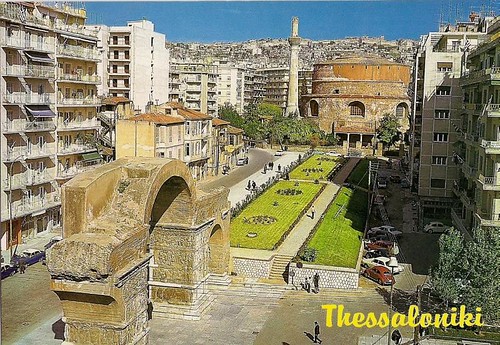
Arch and Tomb of Galerius, Greece


Greece-18, originally uploaded by Abhishek's Received Postcards.

The Arch of Galerius and the Tomb of Galerius are neighboring monuments in the city of Thessaloniki, in the province of Central Macedonia in northern Greece. The Tomb of Galerius is better known as the Rotunda, the Church of Agios Georgios or (in English) the Rotunda of St. George.

Read more...

Wednesday, May 6, 2009

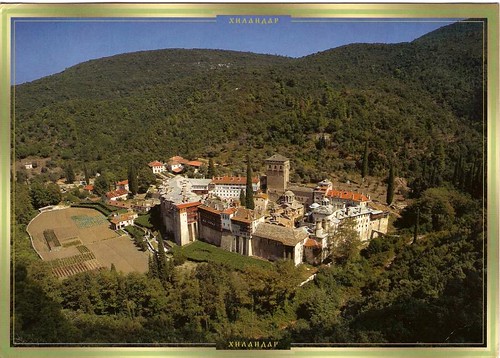
Hilandar Monastery on Mount Athos, Greece


Greece-17, originally uploaded by Abhishek's Received Postcards.

Hilandar is a Serbian Orthodox monastery on Mount Athos in Greece. It was founded in 1198 by the Serbian Saint Sava and his father, Grand Prince Stefan Nemanja (who later became a monk there, taking the monastic name of "Simeon") of Raška. Because its founders are Serbs and the first monks were of the Serbian Orthodox Church it is also called "The Serbian monastery" and is nowadays the monastery where Serbian Orthodox monks traditionally reside. Today, Hilandar represents one of the greatest shrines for the Serbian people. Hilandar does not have an abbot, but an under-abbot. The Mother of God through her Icon of Three Hands (Trojeručica), is considered as the abbess.

Read more...

Saturday, May 2, 2009

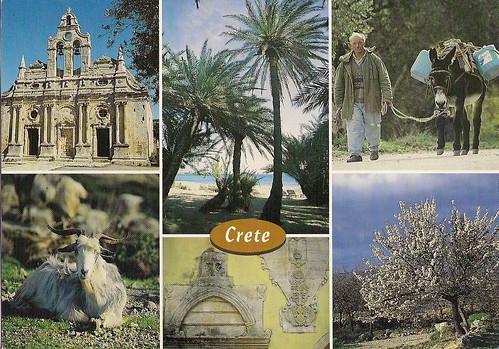
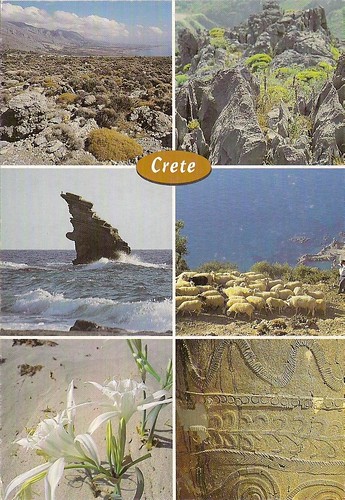
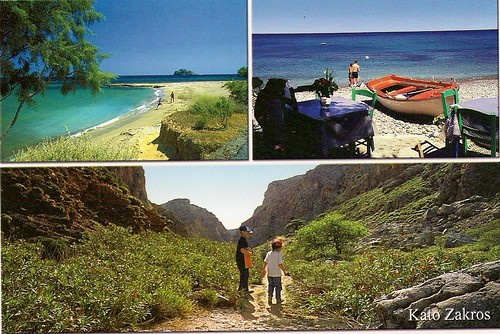
Crete, Greece

Crete is the largest of the Greek islands and the fifth largest island in the Mediterranean Sea at 8,336 km² (3,219 square miles).
Crete was the center of the Minoan civilization (ca. 2600–1400 BC), the oldest Greek civilization.

Read more...

Tuesday, March 17, 2009

Monastery of Saint John the Theologian, Greece


Greece-11, originally uploaded by Abhishek's Received Postcards.

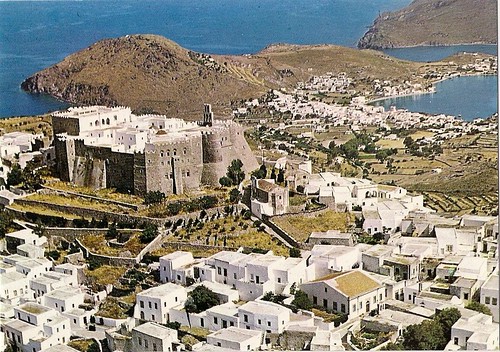
The Monastery of Saint John the Theologian (also called Monastery of Saint John the Divine) is a Greek Orthodox monastery founded in 1088 in Chora on the island of Patmos.


Patmos is a small Greek island in the Aegean Sea. One of the northernmost islands of the Dodecanese complex. Patmos' main communities are Chora (the capital city), and Skala, the only commercial port. Other settlements are Grikou and Kampos. The churches and communities on Patmos are of the Eastern Orthodox tradition. In 1999, the island's historic center Chora, along with the Monastery of Saint John the Theologian and the Cave of the Apocalypse, were declared World Heritage Sites by UNESCO. The monastery was founded by Saint Christodulos.

Read more...

Athenes, Greece


Greece-12, originally uploaded by Abhishek's Received Postcards.

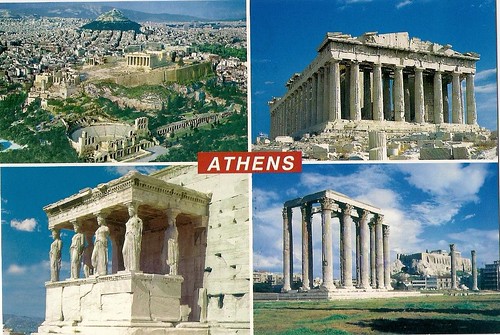
Athens, the capital and largest city of Greece, dominates the Attica periphery; as one of the world's oldest cities, its recorded history spans around 3,400 years.
On the Top Right hand corner, you may see the western side of the Parthenon on the Acropolis of Athens.

Read more...

Daphni Monastery, Greece


Greece-10, originally uploaded by Abhishek's Received Postcards.

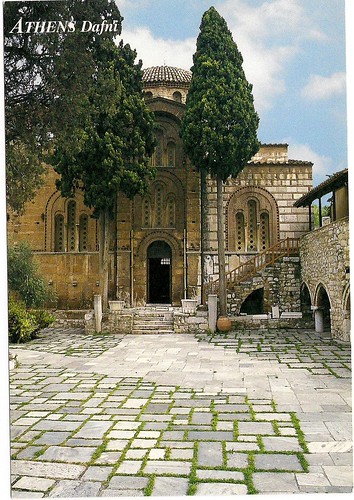
Dafni or Daphni is a monastery 11 km north-west of downtown Athens in Chaidari, south of Athinon Avenue. It is situated near the forest of the same name, on the Sacred Way that led to Eleusis. The forest covers about 15 to 20 km².
The Daphnion was founded about the turn of the 6th century, Christianizing the site of the Sanctuary of Apollo Daphnaios that had been desecrated by the Goths in 395, and reusing the Ionic columns of the ancient temple of Apollo in its portico; only one remains, the others having been removed to London by Thomas Bruce, 7th Earl of Elgin.
The principal church (catholikon), a fine monument of the 11th-century Byzantine art, is a crossin-square church of the octagonal type surmounted by a broad and high dome. The church houses the best preserved complex of mosaics from the early Comnenan period (ca. 1100) when an austere and hieratic manner typical for the Macedonian epoch and represented by the famous Christ Pantocrator image inside the dome, was metamorphosing into a more intimate and delicate style, of which The Angel before St Joachim — with its pastoral backdrop, harmonious gestures and pensive lyricism — is considered a superb example.

Read more...

Saturday, March 7, 2009

Acropolis, Greece


Greece-9, originally uploaded by Abhishek's Received Postcards.

More at another post,/a>

Read more...

Thursday, February 26, 2009

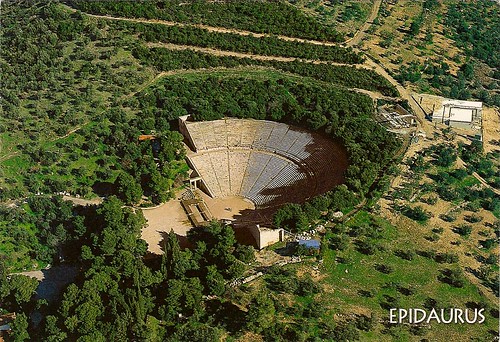
Epidaurus, Greece


Greece-6, originally uploaded by Abhishek's Received Postcards.

Epidaurus was a small city (polis) in ancient Greece, at the Saronic Gulf. The modern town Epidavros, part of the prefecture of Argolis, was built near the ancient site.

Epidaurus was independent of Argos and not included in Argolis until the time of the Romans. With its supporting territory, it formed the small territory called Epidauria. Reputed to be the birthplace of Apollo's son Asklepios, the healer, Epidaurus was known for his sanctuary situated about five miles (8 km) from the town, as well as its theater, which is once again in use today.

Read more...

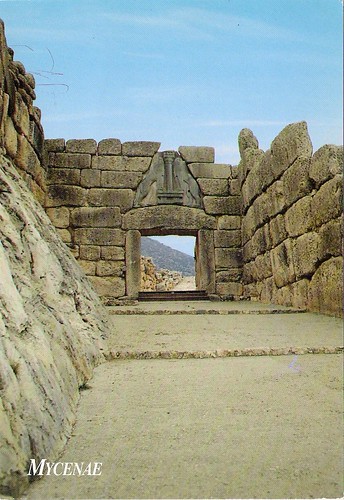
Mycene, Greece


Greece-7, originally uploaded by Abhishek's Received Postcards.

Mycenae, is an archaeological site in Greece, located about 90 km south-west of Athens, in the north-eastern Peloponnese. Argos is 6 km to the south; Corinth, 48 km to the north. From the hill on which the palace was located one can see across the Argolid to the Saronic Gulf.
In the second millennium BC Mycenae was one of the major centres of Greek civilization, a military stronghold which dominated much of southern Greece. The period of Greek history from about 1600 BC to about 1100 BC is called Mycenaean in reference to Mycenae.

Read more...

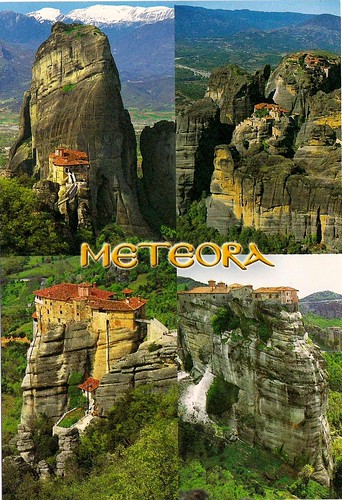
Meteora, Greece


Greece-8, originally uploaded by Abhishek's Received Postcards.

The Metéora which means "suspended rocks", "suspended in the air" or "in the heavens above" in Greek, is one of the largest and most important complexes of Eastern Orthodox monasteries in Kalambaka, Greece and is second only to Mount Athos. The monasteries are built on natural sandstone rock pillars, at the northwestern edge of the Plain of Thessaly near the Peneios river and Pindus Mountains, in central Greece. The Metéora is home to six monasteries and is included on the UNESCO World Heritage List.
List of Monasteries:

1) The Holy Monastery of Great Meteoron
2) The Holy Monastery of Varlaam
3) The Holy Monastery of Rousanou/St. Barbara
4) The Holy Monastery of St. Nicholas Anapausas
5) The Holy Monastery of St. Stephen
6) The Monastery of Holy Trinity

Most of these monasteries are perched on high cliffs and accessible by staircases cut into the rock formations. They were created to serve monks and nuns following the teachings of the Greek Orthodox Church. Much of the architecture of these buildings is Athonite in origin.

Read more...

Wednesday, February 18, 2009

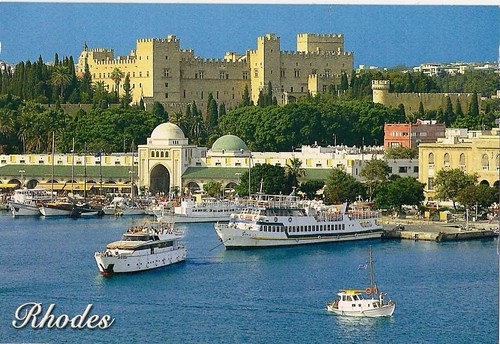
Rhodes Port and Castle, Greece


Greece-4, originally uploaded by Abhishek's Received Postcards.


Rhodes is the principal city of the Greek island of Rhodes, in the southeastern Aegean Sea, and the capital of the Dodecanese prefecture. Its has a population of approximately 80,000. Rhodes has been famous since antiquity as the site of Colossus of Rhodes, one of the Seven Wonders of the World. The citadel of Rhodes, built by the Hospitalliers, is one of the best preserved medieval towns in Europe.

Read more...

Temple of Olympian Zeus & Acropolis, Greece


Greece-5, originally uploaded by Abhishek's Received Postcards.


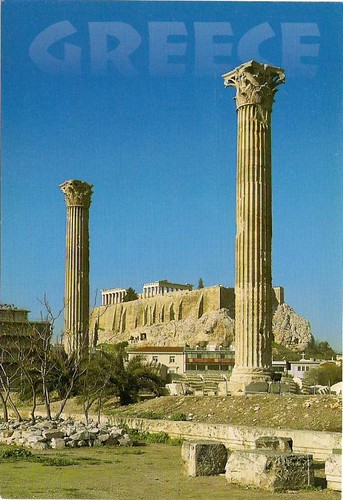
The Temple of Olympian Zeus, also known as the Olympieion, is a colossal ruined temple in the centre of the Greek capital Athens that was dedicated to Zeus, king of the Olympian gods.


Acropolis literally means city on the edge (or extremity). For purposes of defense, early settlers naturally chose elevated ground, frequently a hill with precipitous sides. In many parts of the world, these early citadels became the nuclei of large cities, which grew up on the surrounding lower ground, such as modern Rome.
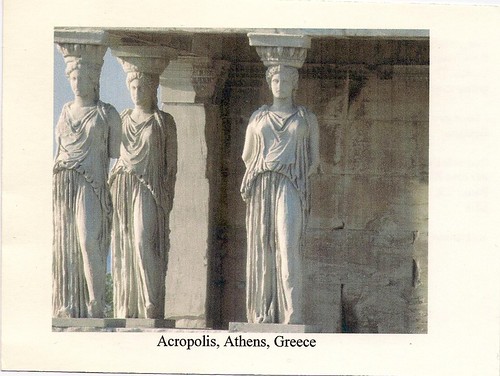
The Acropolis of Athens is the best known acropolis in the world. Although there are many other acropolises in Greece, the significance of the Acropolis of Athens is such that it is commonly known as The Acropolis without qualification. The Acropolis is a flat-topped rock which rises 150 m (490 ft) above sea level in the city of Athens, and it has about 3 hectares of surface area. It was also known as Cecropia, after the legendary serpent-man, Kekrops or Cecrops, the first Athenian king.

Read more...
Tuesday, February 3, 2009

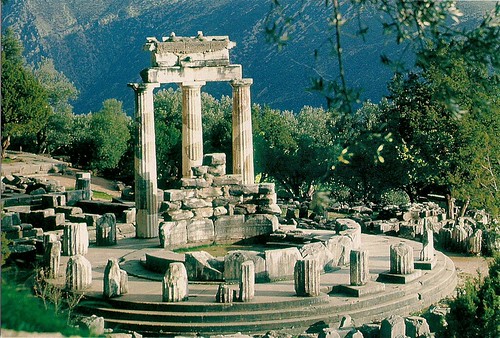
Delphi, The Tholos of Marmaria, Greece


Greece-2, originally uploaded by Abhishek's Postcard World.

The Tholos at the sanctuary of Athena Pronaia is a circular building that was constructed between 380 and 360 BC. It consisted of 20 Doric columns arranged with an exterior diameter of 14.76 meters, with 10 Corinthian columns in the interior.

Read more...

City of Rhodes, Greece


Greece-1, originally uploaded by Abhishek's Postcard World.

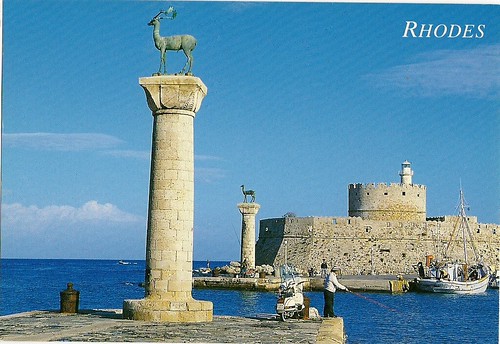
A view of the City of Rhodes.
You can see the Deer statues in Mandraki harbor, where the Colossus of Rhodes possibly once stood.

Read more...

Arcopolis, Greece


Greece-3, originally uploaded by Abhishek's Postcard World.

View of the Propylaea and the Parthenon

A Propylae is any monumental gateway based on the original Propylaea that serves as the entrance to the Acropolis in Athens.
The Parthenon is a temple of the Greek goddess Athena, built in the 5th century BC on the Athenian Acropolis. It is the most important surviving building of Classical Greece, generally considered to be the culmination of the development of the Doric order.

Read more...