Showing posts with label Slovakia. Show all posts

Wednesday, May 6, 2009

Fortified medieval town and Jewish Quarter, Slovakia
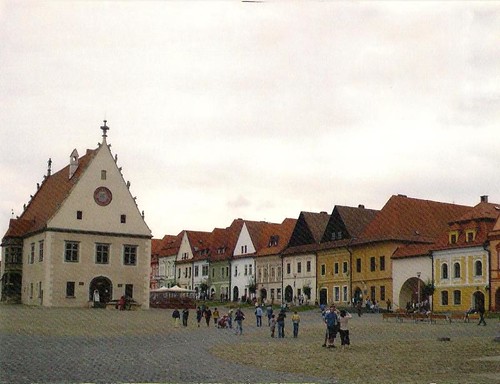

Slovakia-2, originally uploaded by Abhishek's Received Postcards.

The card shows Fortified medieval town and Jewish Quarter in Bardejov. Bardejov is a town in North-Eastern Slovakia. It is situated in the Šariš region and has about 33,000 inhabitants. The spa town, mentioned for the first time in 1241, exhibits numerous cultural monuments in its completely intact medieval town centre. The town is one of UNESCO's World Heritage Sites.

Read more...

St. Nicholas' Church, Bodurzal, Slovakia


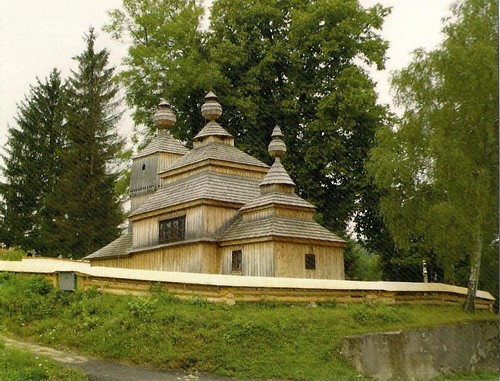
Slovakia-1, originally uploaded by Abhishek's Received Postcards.

St. Nicholas' Church in Bodurzal is the orthodox church situated on the castle hill next to the Bratislava Castle. The church was built in 1661 by Paul Pálffy‘s (1589 - 1655) widow Countess Frances, neé Khuen. It is a part of the "Carpathian Wooden Churches" UNESCO World Heritage Site that consists of nine wooden religious buildings constructed between 16th and 18th century in eight different locations in Slovakia. They include two Roman Catholic (Hervartov, Tvrdošín), three Protestant (so-called Articular churches in Hronsek, Leštiny, Kežmarok) and three Greek Orthodox churches (Bodružal, Ruská Bystrá, Ladomirová) plus one belfry in Hronsek.

Read more...

Primeval Beech Forests of the Carpathians, Slovakia


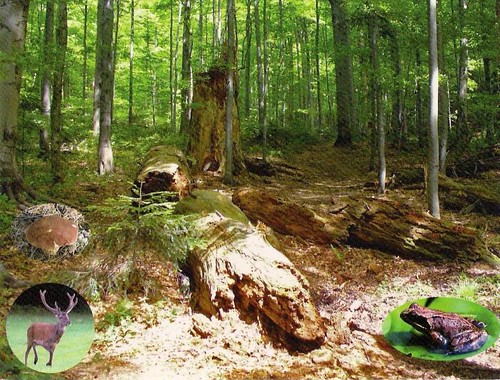
Slovakia-3, originally uploaded by Abhishek's Received Postcards.

The Primeval Beech Forests of the Carpathian, an outstanding example of undisturbed, complex temperate forests, constitute a transnational serial property of ten separate components (6 in Ukraine and 4 in Slovakia) along a 185 km axis from the Rakhiv Mountains and the Chornohirskyi Range in Ukraine, west along the Polonynian Ridge, to the Bukovské vrchy and Vihorlat Mountains in Slovakia. They contain an invaluable genetic reservoir of beech and many species associated with, and dependent on, these forest habitats. They are also an outstanding example of the recolonization and development of terrestrial ecosystems and communities after the last Ice Age, a process which is still ongoing.

Read more...