Showing posts with label Kingdom of Morocco. Show all posts

Tuesday, August 25, 2009

Church and Capitol, Volubilis, Morocco
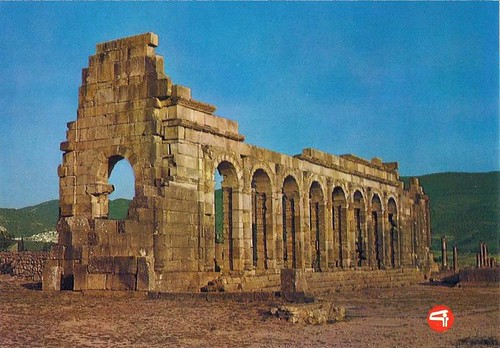

Morocco-7, originally uploaded by Abhishek's Received Postcards.

Volubilis is an archaeological site in Morocco situated near Meknes between Fez and Rabat along the N13 road. The nearest town is Moulay Idriss. Volubilis features the best preserved ruins in this part of northern Africa. In 1997 the site was listed as a UNESCO World Heritage site.

In antiquity, Volubilis was an important Roman town situated near the westernmost border of Roman conquests. It was built on the site of a previous Carthaginian settlement from (at the latest) the third century BC, but that settlement overlies an earlier neolithic habitation.
Volubilis was the administrative center of the province in Roman Africa called Mauretania Tingitana.The fertile lands of the province produced many commodities such as grain and olive oil, which were exported to Rome, contributing to the province's wealth and prosperity. Archaeology has documented the presence of a Jewish community in the Roman period.

Read more...

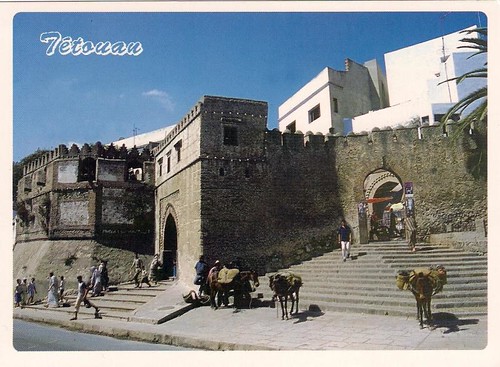
Tétouan, Morocco


Morocco-5, originally uploaded by Abhishek's Received Postcards.

Tétouan, also spelled Tetuan, sometimes Tettawen or Tettawin, is a city in northern Morocco. It is the only open port of Morocco on the Mediterranean Sea.
The Medina (old city) of Tetouan is inscribed on the World Heritage List of the UNESCO.
The main element of the Medina is formed by the ramparts dating from the late fifteenth century that surround the city. These walls allow the passage through 7 entries that are: Bab El Oqla, Bab Saaida (east), Mqabare Bab and Bab Ejjyafe (northward), Bab Nouader (west), Bab A, Bab Remouz (south). Inside the city, the streets are picturesque and bustling with people. The main neighborhoods, dating from the construction of the city are: Laayoune Essania, Trankat, Rbat Aala, Bled, Rbat ASFAUX and Mellah.

Read more...

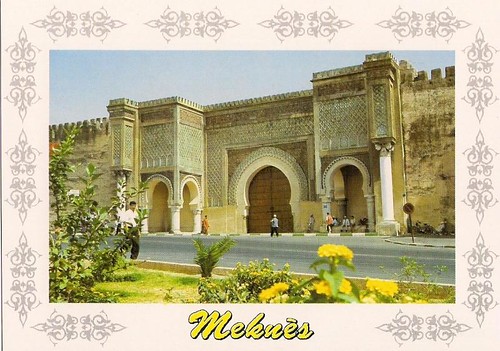
Bab el Mansour, Meknes, Morocco


Morocco-6, originally uploaded by Abhishek's Received Postcards.

Bab el Mansour Aleuj is the largest and most remarkable door in Meknes completed in 1732 by Moulay Abdallah, son of Sultan Moulay Ismail. It was designed by a Christian convert to Islam, hence its name: The door of Mansour, the renegade. Marble columns that adorn the side bastions projecting from the ruins of Volubilis.

Meknes is a city in northern Morocco, located 130 kilometres (81 mi) from the capital Rabat and 60 kilometres (37 mi) from Fes. It is the capital of the Meknes-Tafilalet region. Meknes is named after a Berber tribe which was known as Miknasa (native name: Imknasn) in the medieval Arabic sources.
The land upon which the city is founded and much of its surrounding territory came under the domination of the Roman Empire in AD 117. The original community from which Meknes can be traced was an 8th century Kasbah, or fortress. A Berber tribe called the Miknasa settled there in the 10th century, and a town consequently grew around the fortress. Meknes saw its golden age as the imperial capital of Moulay Ismail following his accession to the Sultanate of Morocco.

Read more...

Saturday, March 7, 2009

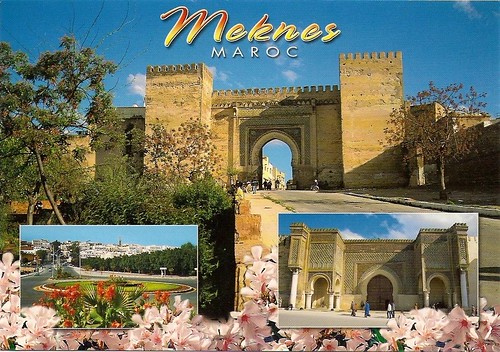
Meknes, Kingdom of Morocco

Meknes is a city in northern Morocco, located 130 kilometres from the capital Rabat and 60 kilometres from Fes. It is served by the A2 expressway between those two cities and by the corresponding railway. Meknes was the capital of Morocco under the reign of Moulay Ismail (1672–1727), before it was relocated to Rabat. Meknes is named after a Berber tribe which was known as Miknasa in the medieval Arabic sources.

Read more...