Taos Pubelo, Mexico
Read more at another post : http://abhishekpostcrossing.blogspot.com/2009/05/taos-pueblo-mexico.html
Read more...Read more at another post : http://abhishekpostcrossing.blogspot.com/2009/05/taos-pueblo-mexico.html
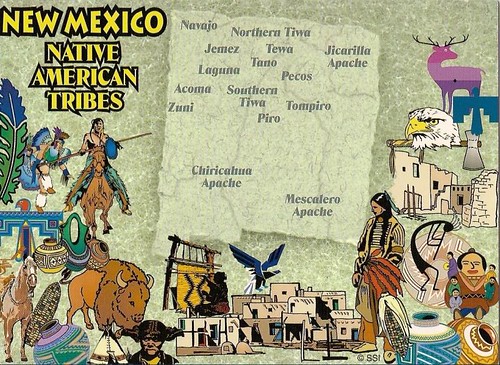
Read more...Native Americans have contributed much to the New Mexico's cultural heritage. Artworks, including pottery, sculpture and weaving, along with tribal music and dance keep the colourful history of the Indians alive.
Read more at : http://en.wikipedia.org/wiki/Native_American_Tribes
** This was not a postcard actually, but a kind of greeting card. But I loved it. so you see it here **
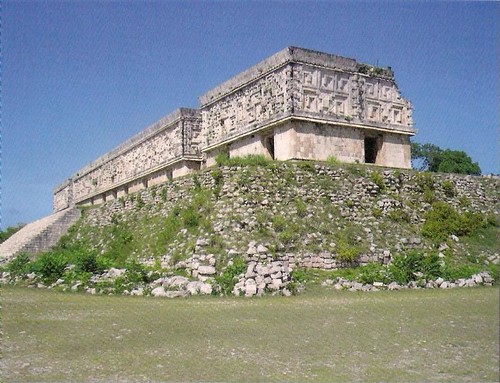
Read more...Uxmal is a large pre-Columbian ruined city of the Maya civilization in the state of Yucatán, Mexico. It is 78 km south of Mérida, Yucatán, or 110 km from that city on Highway 261 towards Campeche, Campeche), 15 km south-southeast of the town of Muna.
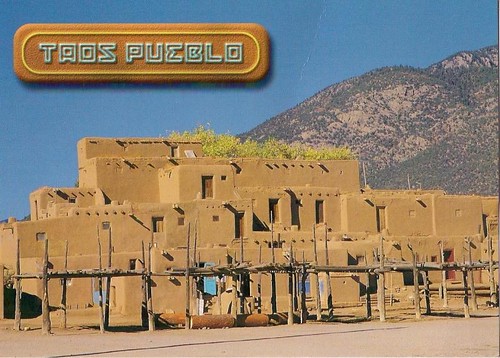
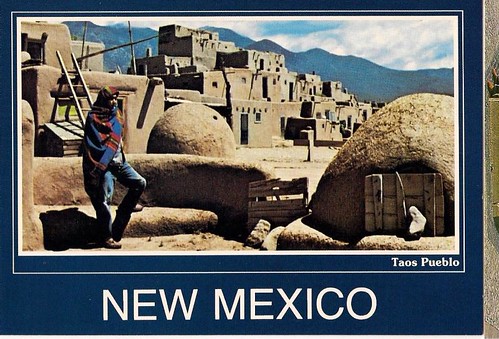
Read more...Taos Pueblo (or Pueblo de Taos) is an ancient pueblo belonging to a Taos (Northern Tiwa) speaking Native American tribe of Pueblo people. It is approximately 1000 years old and lies about 1 mile (1.6 km) north of the modern city of Taos, New Mexico, USA. The Red Willow Creek, or Rio Pueblo, is a small stream which flows through the middle of the pueblo from its source in the Sangre de Cristo Range. A reservation of 95,000 acres (384 km²) is attached to the pueblo, and about 1,900 people live in this area.
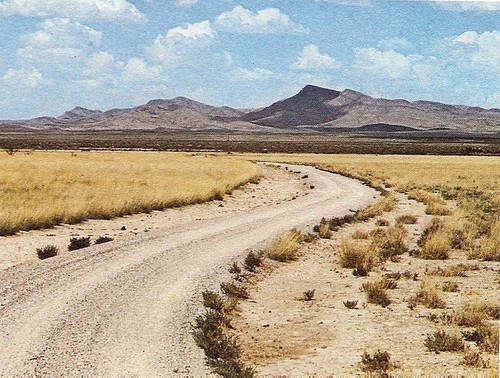
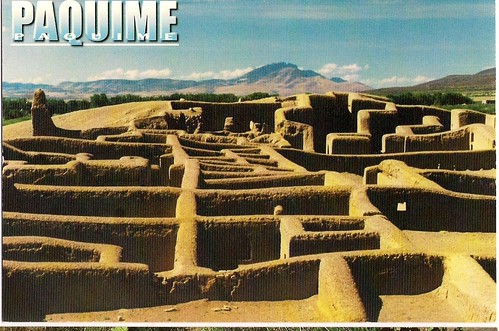
Read more...Casas Grandes (Spanish for Great Houses; also known as Paquimé) is the contemporary name given to a pre-Columbian archaeological zone and its central site, located in northwestern Mexico in the modern-day Mexican state of Chihuahua. Regarded as one of the most significant archaeological zones in the northwestern region, Casas Grandes is centered in a wide, fertile valley on the Casas Grandes or San Miguel river, some 35 miles (56 km) south of Janos and 150 miles (240 km) northwest of the state capital, the city of Chihuahua. The archaeological zone is contained within the eponymous modern municipio (municipality) of Casas Grandes. The valley and region has long been inhabited by indigenous groups.
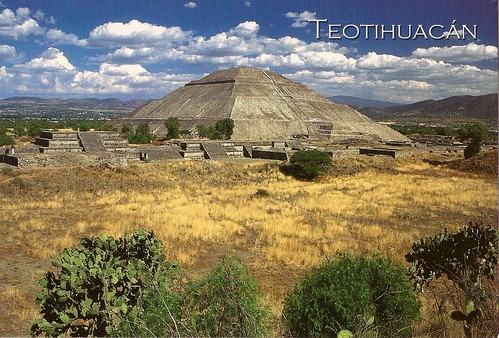
Read more...Teotihuacan is an enormous archaeological site in the Basin of Mexico, containing some of the largest pyramidal structures built in the pre-Columbian Americas. Apart from the pyramidal structures, the archaeological site of Teotihuacan is also known for its large residential complexes, the so-called "street of the dead", and its colorful well-preserved murals.
Teotihuacan was, at its apogee in the first half of the 1st millennium CE, the largest city in the pre-Columbian Americas. During its zenith it may have had more than 100,000 inhabitants placing it among the largest cities of the world in this period. The civilization and cultural complex associated with the site is also referred to as Teotihuacan or Teotihuacano. Although it is a subject of debate whether Teotihuacan was the center of an empire, its influence throughout Mesoamerica is well documented; evidence of Teotihuacano presence, if not outright political and economic control, can be seen at numerous sites in Veracruz and the Maya region. The ethnicity of the inhabitants of Teotihuacan is also a subject of debate and possible candidates are the Nahua, Otomi or Totonac ethnic groups. Often it has been suggested that Teotihuacan was in fact a multiethnic state.
The Hospicio Cabañas in Guadalajara, Jalisco, Mexico, a World Heritage Site, is one of the oldest and largest hospital complexes in Spanish America.
The complex was founded in 1791 by the Bishop of Guadalajara in order to combine the functions of a workhouse, hospital, orphanage, and almshouse. It owes its name to Juan Ruiz de Cabañas who was appointed to the see of Guadalajara in 1796 and engaged Manuel Tolsá, a renowned architect from Mexico City, to design the structure.
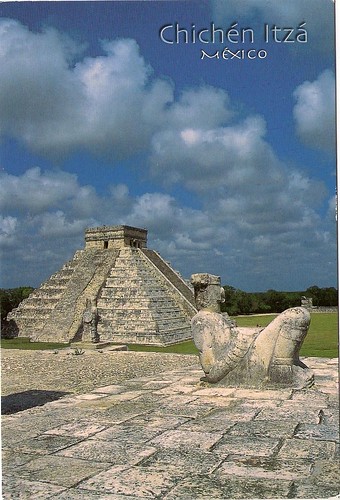
Chichen Itza ("At the mouth of the well of the Itza") is a large pre-Columbian archaeological site built by the Maya civilization located in the northern center of the Yucatán Peninsula, in the Yucatán state, present-day Mexico.
Read more...